Belted Galloways back on Moel Famau to graze moorland for rare birds
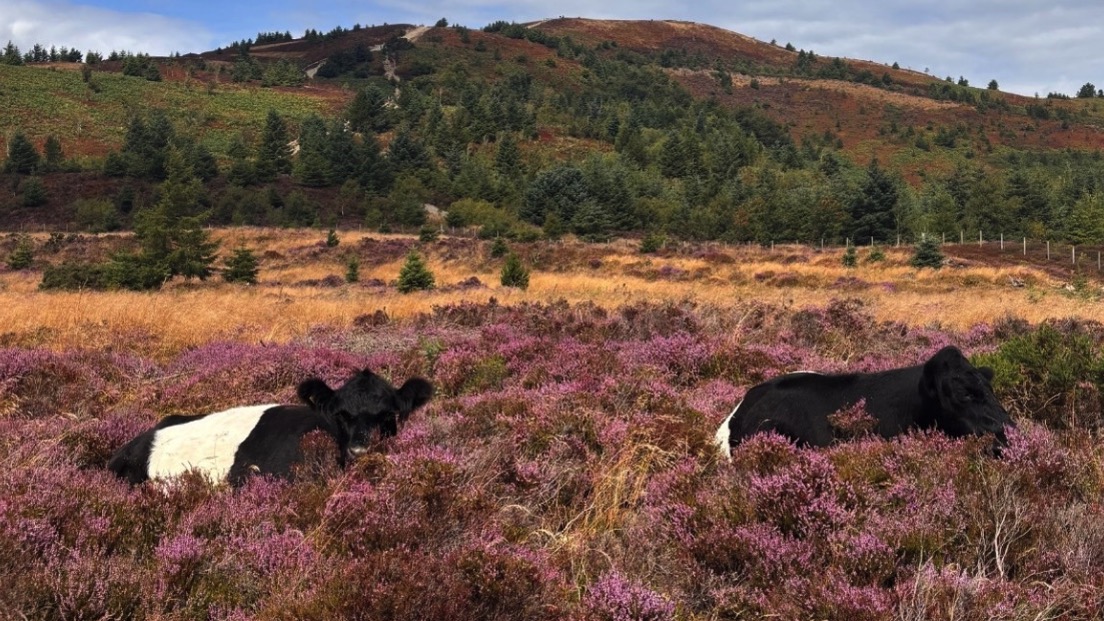
Cattle are back on Moel Famau, grazing an enclosure set aside to help protect black grouse.
The Belted Galloways have returned to the hill as part of a conservation grazing scheme run by Natural Resources Wales and the Clwydian Range and Dee Valley National Landscape.
Their enclosure is called House for a Grouse. The cattle work by eating plants and small trees that would otherwise take over the moorland and their hooves also break up dense vegetation, creating small pockets of habitat for wildlife.
Black grouse need open ground for the males’ spring display, known as lekking, and thicker cover nearby to nest in.
Moel Famau rises to 554 metres and is the highest point in the Clwydian Range, topped by the Jubilee Tower.
The National Landscape says the surrounding country park draws about 200,000 visitors a year.
Keeping the vegetation from growing too tall or too wide preserves both, according to the National Landscape.
The organisation said its annual black grouse count has recorded numbers in the area steadily increasing.
It described the bird as among the fastest declining in the UK, and said it has already been lost from many areas of England where it was once found.
Nightjar and skylark are also named as species that benefit from the grazing.
Belted Galloways are a traditional British breed that have grazed this kind of ground for centuries.
The National Landscape says they cope better with hillside weather and rough grazing than less hardy breeds.
The grazing is part of ongoing partnership work between Natural Resources Wales and the National Landscape to manage the moorland.
Spotted something? Got a story? Send a Facebook Message | A direct message on Twitter | Email news@north.wales