Back-to-basics online safety tips for North Wales residents
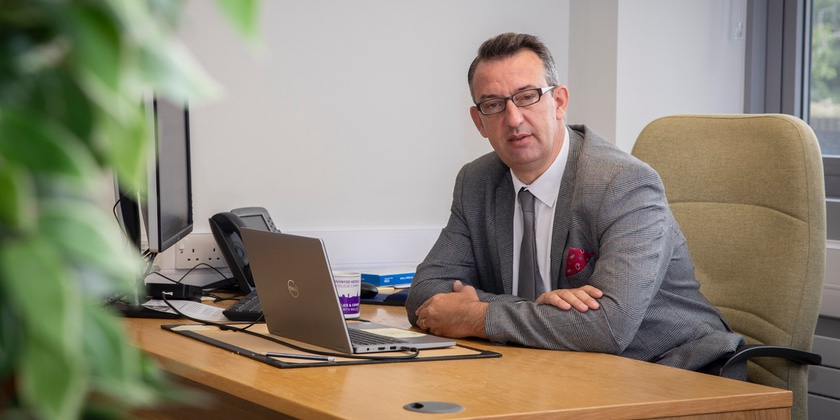
A back-to-basics online safety campaign has been launched to encourage adults across the region to use the internet safely, securely and with confidence.
It has been launched to coincide with Get Safe Online Week, which takes place between Monday 6 October to Friday 10 October. The campaign has been created in collaboration with the Police and Crime Commissioner (PCC) for North Wales Andy Dunbobbin and North Wales Police and charity, Get Safe Online.
With people using the internet more than ever, the initiative aims to help members of the public stay scam aware and to protect themselves from disrespectful behaviour and inappropriate content.
Get Safe Online has issued the following advice for North Wales residents:
- Protect your passwords: Use a different password for each account and make them strong by combining random words with numbers and symbols. A password manager can help keep them safe and memorable.
- Keep your devices secure: Install reliable internet security software (often called anti-virus) on your computers, tablets, and smartphones – and keep it switched on and updated. Protect your devices with a unique password or passcode.
- Update regularly: Operating system, app and software updates often include essential security protection. Installing them when prompted helps keep your devices safe. Better still, set them to update automatically.
- Pause and check who you’re dealing with: Online messages, emails or phone calls aren’t always from who they appear to be. AI can make fake messages seem even more convincing, so take a moment to confirm identities before sharing information, by contacting the person or organisation they claim to come from on the number you know to be correct.
- Think before you click: Clicking on links and attachments in unexpected emails, texts or posts can lead to fraud, identity theft or other harms. If something feels unusual, take time to check it first.
- Stay smart when using public Wi-Fi: Wi-Fi in cafés, hotels, and public spaces isn’t always secure, or could even be fraudulent. For private activities such as banking or shopping, use your mobile data, a broadband dongle, or a VPN.
- Choose safe ways to pay: Use secure payment methods such as credit cards or trusted services when shopping online. These give you stronger protection than a direct bank transfer, where you may lose your money in the event of fraud.
- Take care what you share: Be careful with the personal details you post online, such as your address or financial or other confidential information. Once shared, it can be hard to control who sees it.
- Check information and news: Not all online information is trustworthy. Misinformation, disinformation, and AI-generated fake news can look very real. Verify with reliable sources before believing, sharing or acting on it.
- Be kind and responsible: Online communities are at their best when we treat each other with respect. Communicate thoughtfully, just as you would face-to-face.
Police and Crime Commissioner Andy Dunbobbin said: “The internet is a hugely powerful tool that has changed our lives, often for the better.
“But there is always a criminal who will try and use it for their own ends, whether that be through fraud, theft, or deception. That’s why it’s always important to remind ourselves every so often of how to stop possibly falling victim to crime.
“With this in mind, I am supporting this back to basics campaign from Get Safe Online and I encourage people to follow the advice and stay safe while using the internet and information technology.”
PC Dewi Owen from North Wales Police’s Cyber Crime team added: “In the spirit of the back-to-basics campaign there are a few simple steps that anyone can take that will help them to stay safe and secure when online.
“For example, email and social media hacking are the most common forms of cyber crime reported in the UK, with 35,434 people reporting their email or social media account hacked in 2024, according to Action Fraud.
“Having a strong and long 3 random word password will greatly reduce the probability of an online account being compromised and Microsoft state that having Multi-Factor Authentication turned on would prevent 99.9% of online account compromises that they see.
“Ensuring that an account password is strong and that Multi-Factor Authentication is enabled on an account will only take a few minutes and is certainly worth the time and effort.
“Most online scams and cyber-attacks also involve an element of social engineering where the cyber criminals or fraudsters will trick individuals into sharing personal or financial information with them or even passwords or one time codes.
“Therefore, taking the time check and verify any unexpected contact online before sharing any information will often be enough to identify and prevent a scam or cyber-attack from happening.”
For more tips and guidance, visit www.getsafeonline.org
Spotted something? Got a story? Send a Facebook Message | A direct message on Twitter | Email news@north.wales